Medically Reviewed by: Edward C. Wade, M.D., F.A.C.S.
Why Does Near Vision Get Worse After Age 40?


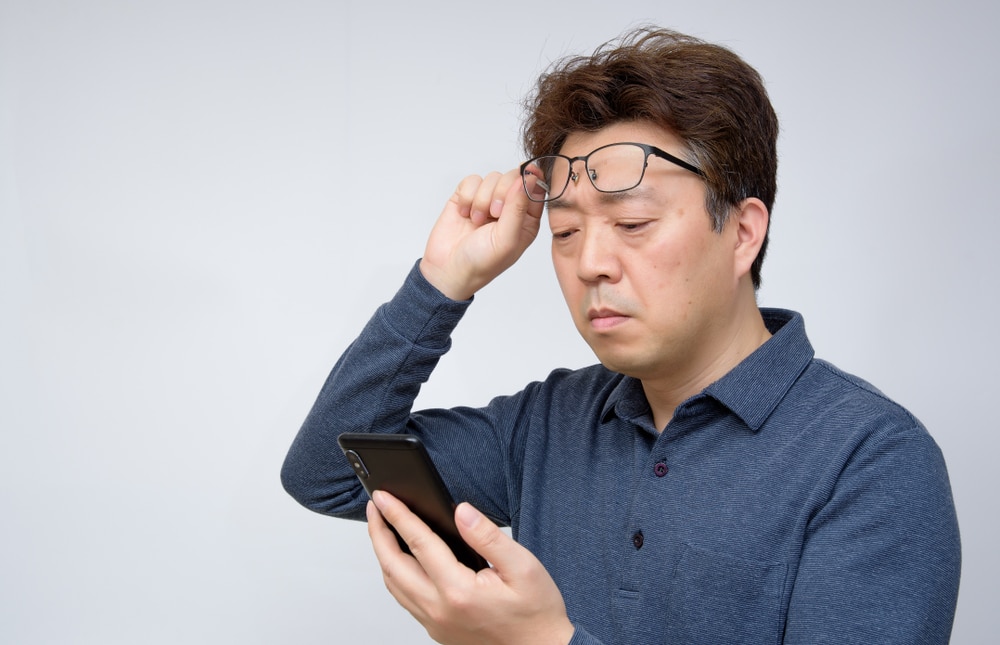
Somewhere around your 40th birthday, you might catch yourself holding a menu a little farther away or turning up the lights just to read a text message. Small print that once looked sharp now seems fuzzy, and your arms feel too short to bring things into focus. This change in your near vision is one of the most predictable parts of aging, and it happens to nearly everyone.
The medical term for age-related loss of near vision is presbyopia. It can be frustrating, but it’s a part of how the eye’s focusing system shifts over time.
Keep reading to learn more about presbyopia, including how eye doctors treat it.
What Happens to Your Eyes After 40?

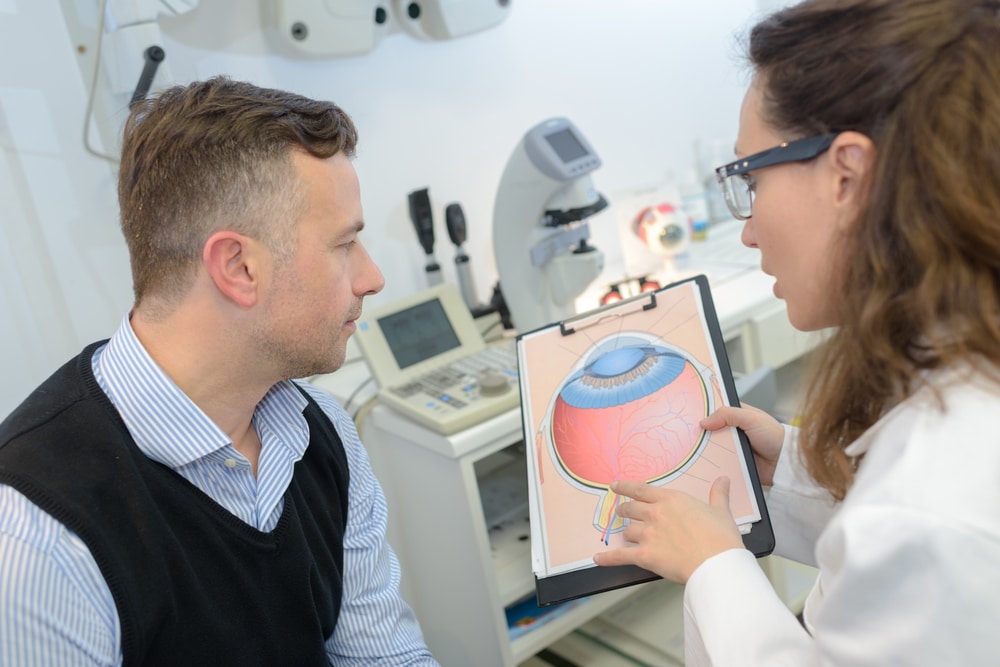
Inside your eye, light passes through the cornea and the lens, which focuses that light onto the retina at the back of the eye. To see something up close, the lens has to change shape and become rounder, a process called accommodation. The lens sits behind the pupil and is normally soft and flexible. Tiny muscles around it tighten and relax to adjust its curve, letting you shift focus from a distant road sign to the book in your hands.
As the years pass, that flexibility diminishes, the lens grows thicker and stiffer, and the muscles lose some of their pull. When the lens can no longer round up the way it once did, close objects slip out of focus. This gradual stiffening is the heart of presbyopia, and it explains why reading up close is usually the first task to suffer.
What Causes Presbyopia?
Presbyopia comes with normal aging, not habits like reading in dim light or spending too much time on screens. Everyone’s lens hardens with time, which is why the condition affects people of every background, whether or not they needed glasses earlier in life.
The lenses in your eyes begin to lose flexibility around age 40 and keep changing into your 60s. The biological process behind presbyopia is the same for everyone, though the age at which you notice it can vary. People who were already farsighted often feel the effects sooner, while those who are nearsighted may notice them later or find that slipping off their glasses helps them read.
How is Presbyopia Different From Being Nearsighted or Farsighted?
The symptoms of presbyopia overlap with other vision problems, which makes it confusing. Nearsightedness (myopia) and farsightedness (hyperopia) are refractive errors, meaning the shape of the eye or cornea bends light incorrectly. People are usually born with a tendency toward these conditions.
Presbyopia is driven by age and the loss of lens flexibility rather than the overall shape of the eye. That is why someone can be farsighted their whole life and still develop presbyopia on top of it later on. The two can stack together, which sometimes means needing more than one kind of correction.
Signs Your Near Vision is Changing

The clues tend to show up during everyday tasks like holding your phone at arm’s length to read a message or experiencing eyestrain or headaches after close work like sewing, following a recipe, or scrolling on a tablet. Many people also find they need brighter light to see well and that small print blurs at a normal reading distance. If these signs sound familiar, it may be worth finding out whether reading glasses could help, since they are often the simplest first step. Regular eye exams matter here as well, because the years after 40 are also when conditions like cataracts and glaucoma can begin quietly.
Can You Slow Down or Prevent Presbyopia?
There is no proven way to stop presbyopia from developing, since it stems from the natural aging of the lens. No exercise, diet, or eye drop has been shown to reverse the stiffening process.
What you can do is stay ahead of it with routine checkups. Most eye doctors recommend a complete eye exam around age 40, then regular visits after that, because catching changes early keeps your prescription accurate and protects your overall eye health.
What Are the Treatment Options for Near Vision Loss?
There are many options to treat presbyopia, including simple over-the-counter readers, prescription lenses, and several surgical procedures. The right choice depends on your prescription, lifestyle, and goals.
Glasses and Contact Lenses
For many people, drugstore readers or a prescription pair solves the problem. Bifocals, trifocals, and progressive lenses combine near and distance correction in a single lens, while multifocal or monovision contact lenses offer a glasses-free alternative for those who prefer it.
Monovision LASIK
Patients who want to depend less on glasses sometimes consider laser surgery. Standard LASIK does not correct presbyopia, but a technique called Monovision LASIK corrects one eye for distance and leaves the other slightly nearsighted, so the brain blends the two images for both near and far vision.
Lens Replacement Procedures
For a more permanent result, some patients choose to replace the aging lens itself. Refractive lens exchange swaps your natural lens for an artificial intraocular lens, using the same approach as cataract surgery even when no cataract is present.
When a cataract is also involved, multifocal lenses can address the cataract and presbyopia at once, delivering clear vision at near, intermediate, and far distances.
“LASIK and/or lens replacement procedures aren’t just about changing how you see the world; it’s about changing how you live in it by providing the freedom of advanced, precise, and personalized vision correction” – Dr. Mark Mayo
Seeing Clearly Again After 40

Watching your near vision get worse after age 40 can feel frustrating, yet presbyopia is one of the most manageable vision changes there is. Knowing that it stems from a stiffening lens, rather than anything you did wrong, makes it easier to focus on solutions.
A thorough eye exam is the best way to pin down what is causing your symptoms and which correction fits your daily routine.
Are you noticing that your near vision gets worse after age 40? Schedule an appointment at Eye Center of Texas in Houston, TX, today!
Related Articles

Financing Options Available
Apply today to find a financing option that meets your needs.
Our Locations
-
455 E. Medical Center Blvd., Suite 110, Webster, TX 77598- Medical Office:
- 281-332-1397
-
22215 Cypresswood Dr., Suite 116
Cypress, TX 77433- Medical Office:
- 346-537-0088
- Medical Fax:
- 346-537-0187
-
6565 W. Loop S., Suite 650, Bellaire, TX 77401- Medical Office:
- 713-797-1010
-
Greenhouse Medical Plaza
2051 Greenhouse Road, Suite 110
Houston, TX 77084- Medical Office:
- 346-547-7070
- Medical Fax:
- 281-214-2971
-
4415 Crenshaw Road, Pasadena, TX 77504- Medical Office:
- 281-977-8800
-
15200 S.W. Freeway, Suite 130, Sugar Land, TX 77478- Medical Office:
- 281-277-1010
-
100 Medical Center Blvd., Suite 118
Conroe, TX 77304- Medical Office:
- 936-647-1610
- Medical Fax:
- 936-647-1620
No locations match that search.