Medically Reviewed by:
Cataract Surgery Now Gives Patients GREAT Options…


The old stigma of being diagnosed with cataracts has been transformed through technology into some pretty exciting choices! Intraocular Lenses (IOLs) are lens implants that are placed in the eye after the eye’s natural crystalline lens is removed because of a cataract. At Eye Center of Texas, we offer several IOL options to meet your overall vision goals and lifestyle after cataract surgery:
Monofocal (traditional) IOLs provide a single focal point designed to provide clear distance vision. This means you will be able to see objects far away and will most likely need glasses for reading and any type of close detailed work.
Multifocal (Presbyopia-Correcting) IOL
Most people over age 50 lose their ability to read without glasses due to presbyopia. Multifocal (Premium) IOLs now make it possible to regain the close-up vision you may have had when you were younger.
Multifocal IOLs have multiple focal points, designed to replace the natural lens affected by the cataract and correct presbyopia (the ability to focus up close) in order to provide a full range of vision; near, far and in-between. The Multifocal Lens design also offers enhanced image quality.
Toric (Astigmatism-Correcting) IOL
Toric IOLs can correct astigmatism, which is a condition where the cornea is warped so light rays entering the eye cannot focus on one spot of the retina. This results in distorted, blurry or even double vision. Toric IOLs are lenses with a single focal point to provide distance vision and enhanced image quality.
Prescription Glasses
Corrective eyeglasses or contact lens can be worn following cataract surgery to correct excess astigmatism to allow for best corrected vision.
To learn more about IOL options, please feel free to contact Kathy or Steve at 713-395-1515.
Related Articles



Medically Reviewed by:
So You Have a Cataract…
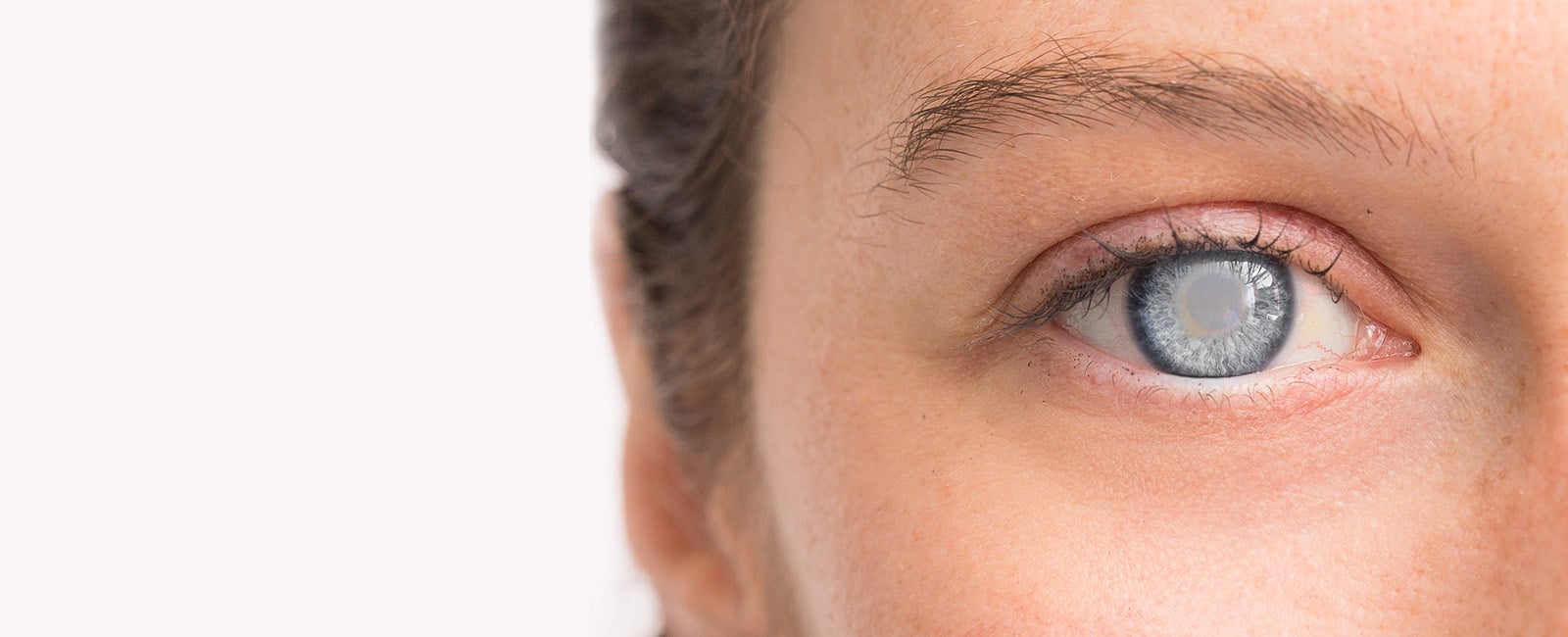
Today I met Kate P. she’s 62…in great health…and has cataracts. After talking with her for awhile, she admitted her optometrist told her she had cataracts (over a year ago), but she was too scared to see a surgeon. She’s couldn’t tell me why she was scared…she said maybe because she thought the surgery would go bad and she would be blind or because she thought they would “just go away”. She realized her vision was too poor to drive at night…and she didn’t want to be forced to stay home because of her terrible night vision. So finally…today she had her cataract evaluation, talked with Dr. Mayo about her options…and booked her cataract surgery. Just before Kate left, she told me after meeting Dr. Mayo, our staff, and learning more about cataracts…she was relieved and felt she was in great hands and is looking forward to her new…clear vision.
Just in case you don’t know…
- Most cataracts are related to aging…and by age 80 more than half of all Americans either have a cataract or have had a cataract.
- No one knows why the eye’s lens changes as we age…they just do.
- When symptoms begin to appear, you may be able to improve your vision for a while using new glasses stronger bifocals, magnification, appropriate lighting or other visual aids, but eventually surgical intervention will be necessary to see clearly again.
- Cataract surgery is very successful in restoring vision. In fact, it is the most frequently performed surgery in the United States, with more than 3 million Americans undergoing cataract surgery each year.
- While cataract surgery is one of the most frequently performed surgeries…your outcome is highly dependent on your surgeon’s skill, volume and experience. It’s import ants to find a skilled ophthalmologist who not only has a long track record of success , but one who will also make you feel comfortable.
- Additionally, you want to find a practice that embraces both proven traditional tactics for cataract surgery, as well as the latest in technological advancements for the best results possible.
Today, cataract surgery is one of the easiest, most common, and safest surgeries performed in the United States. You should consider it as soon as vision problems start to interfere with usual activities.
Related Articles
Financing Options Available
Apply today to find a financing option that meets your needs.
Our Locations
Houston/Bellaire
6565 W. Loop S., Suite 650Bellaire, TX 77401
Medical Office:
713-797-1010
Medical Fax:
713-357-7276
LASIK/Near Vision:
Office: 713-395-1515
Fax: 713-357-7278
Pasadena
4415 Crenshaw RoadPasadena, TX 77504
Medical Office:
281-977-8800
Medical Fax:
281-977-8877
Sugar Land
15200 S.W. Freeway, Suite 130Sugar Land, TX 77478
Medical Office:
281-277-1010
Medical Fax:
281-277-4504
Clear Lake
455 E. Medical Center Blvd., Suite 110Webster, TX 77598
Medical Office:
281-332-1397
Medical Fax:
281-282-9152
Katy
Greenhouse Medical Plaza2051 Greenhouse Road, Suite 110
Houston, TX 77084
Medical Office:
346-547-7070
Medical Fax:
281-214-2971
The Woodlands/Conroe
100 Medical Center Blvd., Suite 118Conroe, TX 77304
Medical Office:
936-647-1610
Medical Fax:
936-647-1620