Medically Reviewed by: Mark L. Mayo, M.D.
What is a Cataract Evaluation?


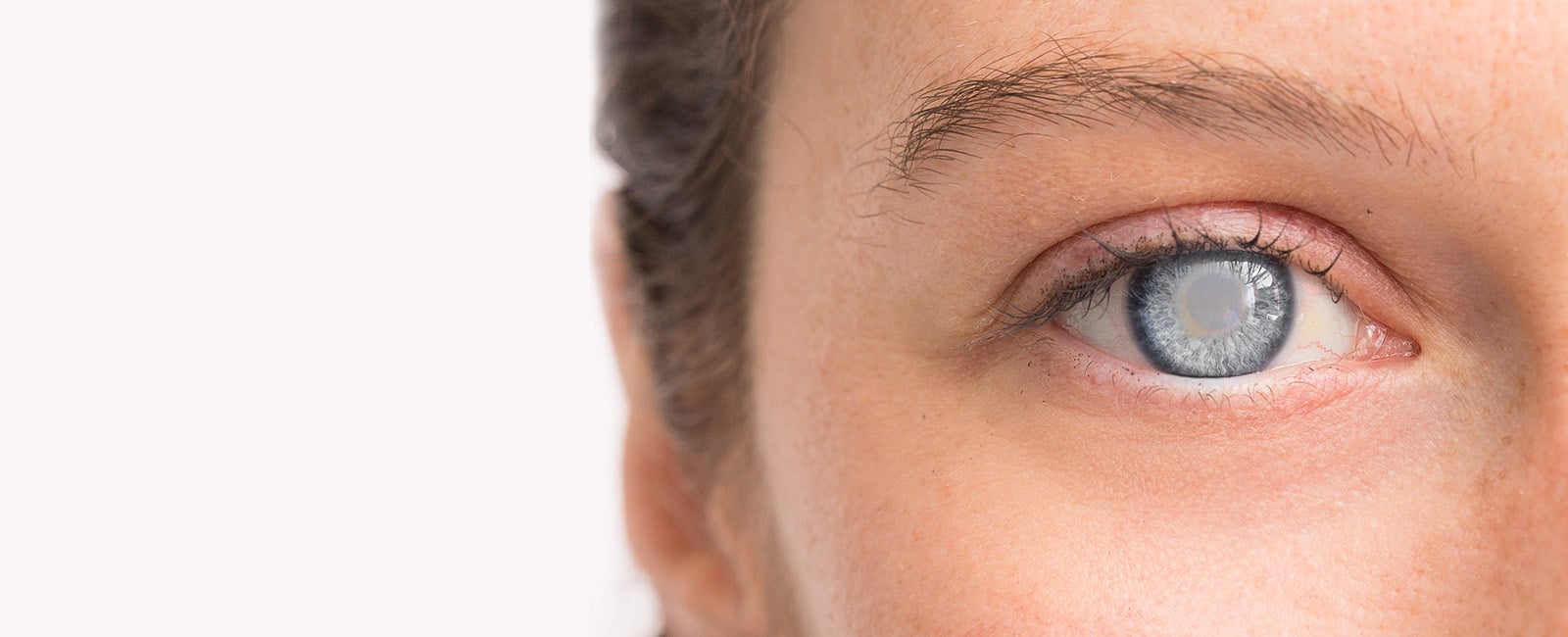
Have you ever wondered how the doctors determine if you have a cataract? At Eye Center of Texas cataracts are detected through a comprehensive cataract evaluation eye exam that may include the following tests:
- Visual Acuity: A visual acuity test measures your quality of vision at certain distances. Your doctor will ask you to read letters of various sizes from a chart. Your eyes will be tested individually and together to measure the accuracy of your eyesight at different distances. A visual acuity test is an easy, painless, and quick way to diagnosis cataracts, although more tests will be needed to make sure cataracts are the cause of your vision problems.
- Contrast Sensitivity: Contrast sensitivity testing is similar to visual acuity testing but places greater emphasis on how cataracts can decrease image contrast due to light scattering and glare caused by the cataract. Eye doctors consider contrast sensitivity testing to be a more realistic measurement of true quality of vision.
- Slit Lamp: A slit lamp is a special type of microscope that magnifies your eye so your doctor can examine the lens to determine the presence and severity of a cataract. Your doctor will ask you to place your chin on the chin rest of the slit lamp. A light will then be directed at your eye. By looking through the slit lamp, your doctor can examine the lens to determine the degree to which it is clouded.
- Pupil Dilation: Pupil dilation is a common test used in diagnosing cataracts. Clouding of the lens is not noticeable until a cataract reaches an advanced stage. When your eye is dilated, however, the pupil increases in size, offering a view of your entire lens. By thoroughly examining the lens, a doctor can determine whether or not a cataract is affecting your quality of vision.
Additional tests may be needed and cataract evaluations take between 3-4 hours.
Related Articles



Financing Options Available
Apply today to find a financing option that meets your needs.
Our Locations
Houston/Bellaire
6565 W. Loop S., Suite 650Bellaire, TX 77401
Medical Office:
713-797-1010
Medical Fax:
713-357-7276
LASIK/Near Vision:
Office: 713-395-1515
Fax: 713-357-7278
Pasadena
4415 Crenshaw RoadPasadena, TX 77504
Medical Office:
281-977-8800
Medical Fax:
281-977-8877
Sugar Land
15200 S.W. Freeway, Suite 130Sugar Land, TX 77478
Medical Office:
281-277-1010
Medical Fax:
281-277-4504
Clear Lake
455 E. Medical Center Blvd., Suite 110Webster, TX 77598
Medical Office:
281-332-1397
Medical Fax:
281-282-9152
Katy
Greenhouse Medical Plaza2051 Greenhouse Road, Suite 110
Houston, TX 77084
Medical Office:
346-547-7070
Medical Fax:
281-214-2971
The Woodlands/Conroe
100 Medical Center Blvd., Suite 118Conroe, TX 77304
Medical Office:
936-647-1610
Medical Fax:
936-647-1620
Cypress
22215 Cypresswood Dr., Suite 116Cypress, TX 77433
Main Phone:
(346) 537-0088
Fax Line:
(346) 537-0187