Medically Reviewed by:
March is Workplace Eye Wellness Month


March is Workplace Eye Wellness Month. Whether you work on a computer, or use power tools at your job, it’s important to keep eye health and safety in mind…since the gift of sight is irreplaceable.
More and more workers using technology suffer from computer vision syndrome. Computer vision syndrome is a group of eye and vision-related problems that result from prolonged computer use. Computer vision syndrome symptoms can range from physical fatigue to eye twitching. If you think you are suffering from symptoms of computer vision syndrome, it’s important to see your eye doctor.
However, if you are like most people who work on electronic devices all day, there are things that you can do to prevent computer vision syndrome. Here are some tips that you can use:
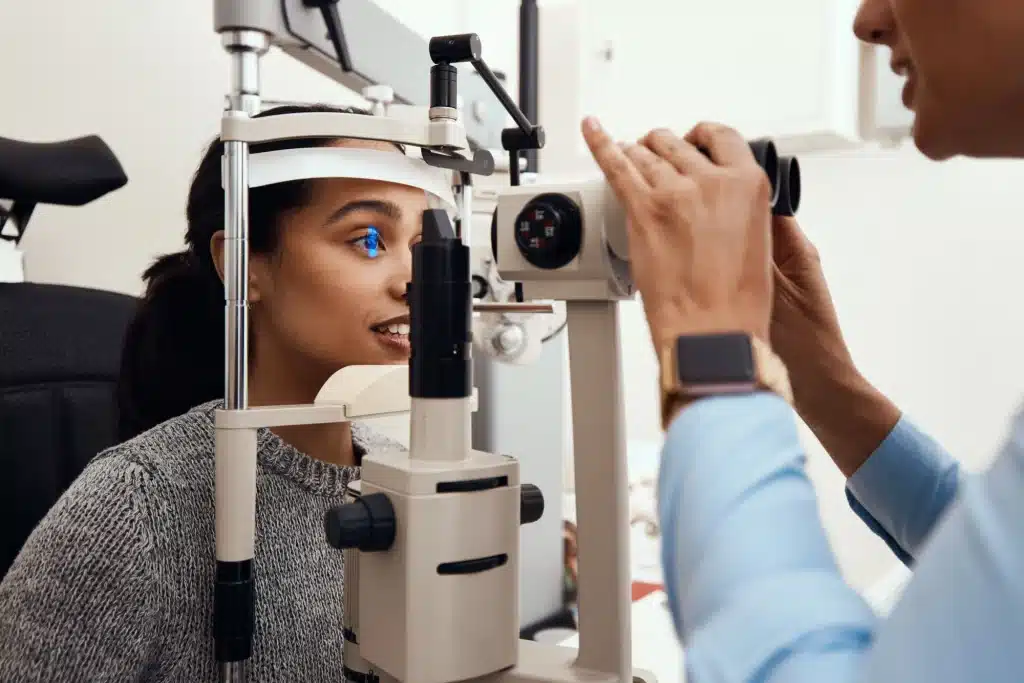
- See An Eye Doctor: The first step to preventing computer vision syndrome is seeing your eye doctor for an eye exam. It is a great way to keep tabs on your eye health. Tell your eye doctor if you are a heavy user of electronic devices during your daily routine.
- Get to Know the 20/20/20 Rule: If you work on a computer at your desk, take a 20 second break every 20 minutes and shift your vision to something else 20 feet away.
- Make Sure to Blink: When you work at a computer or on other electronic devices, you are less likely to blink. However, you need to blink because it keeps your eyes moist and prevents dry eye. So remember to blink when you are working at your computer.
- Take Mini Breaks: Most people only take two 15 minute breaks throughout the work day, but if you take shorter more frequent breaks from working on your computer, it will be a lot easier on your eyes. Make sure to get up, stretch, and move around during your breaks so that your eyes get a chance to rest.
- Computer Eyewear Is An Option: Your eye doctor may be able to prescribe computer eyewear that can help alleviate eye strain if you are heavy electronics user.
If your job requires the use of heavy machinery, be sure to remember safety glasses. All it takes is a tiny sliver of metal, a particle of dust or a splash of chemical to cause significant and even permanent eye damage.
Related Articles



Medically Reviewed by:
The Heart Truth
February is National Heart Disease Awareness Month and National AMD (Age-Related Macular Degeneration) and Low Vision Awareness Month
Some of the same things that put you at risk for heart disease and stroke also put you at risk for AMD. These include:
- High blood pressure
- High cholesterol
- Obesity
- Smoking
You can tackle several risk factors at once by doing these 4 things: eat healthier foods, exercise, stop smoking and take your medications as instructed.
Related Articles
Financing Options Available
Apply today to find a financing option that meets your needs.
Our Locations
-
455 E. Medical Center Blvd., Suite 110, Webster, TX 77598- Medical Office:
- 281-332-1397
-
22215 Cypresswood Dr., Suite 116
Cypress, TX 77433- Medical Office:
- 346-537-0088
- Medical Fax:
- 346-537-0187
-
6565 W. Loop S., Suite 650, Bellaire, TX 77401- Medical Office:
- 713-797-1010
-
Greenhouse Medical Plaza
2051 Greenhouse Road, Suite 110
Houston, TX 77084- Medical Office:
- 346-547-7070
- Medical Fax:
- 281-214-2971
-
4415 Crenshaw Road, Pasadena, TX 77504- Medical Office:
- 281-977-8800
-
15200 S.W. Freeway, Suite 130, Sugar Land, TX 77478- Medical Office:
- 281-277-1010
-
100 Medical Center Blvd., Suite 118
Conroe, TX 77304- Medical Office:
- 936-647-1610
- Medical Fax:
- 936-647-1620
No locations match that search.