Medically Reviewed by: Edward C. Wade, M.D., F.A.C.S.
What Causes White Bumps on the Eyelid?


It can be alarming if white bumps develop on your eyelid, especially if they are painful or cause noticeable swelling. Depending on their size and location, they can affect the comfort or quality of your vision and make you feel self-conscious.
Several types of white bumps can form on the eyelid. Keep reading to learn more about the different conditions that cause white bumps, the best ways to treat them, and some steps you can take to prevent them.
Types of White Bumps That Can Occur on the Eyelid
The four most common causes of white bumps on the eyelid are milia, styes, chalazion, and ocular rosacea. While all of these conditions can cause white bumps, they each have different causes.
Milia
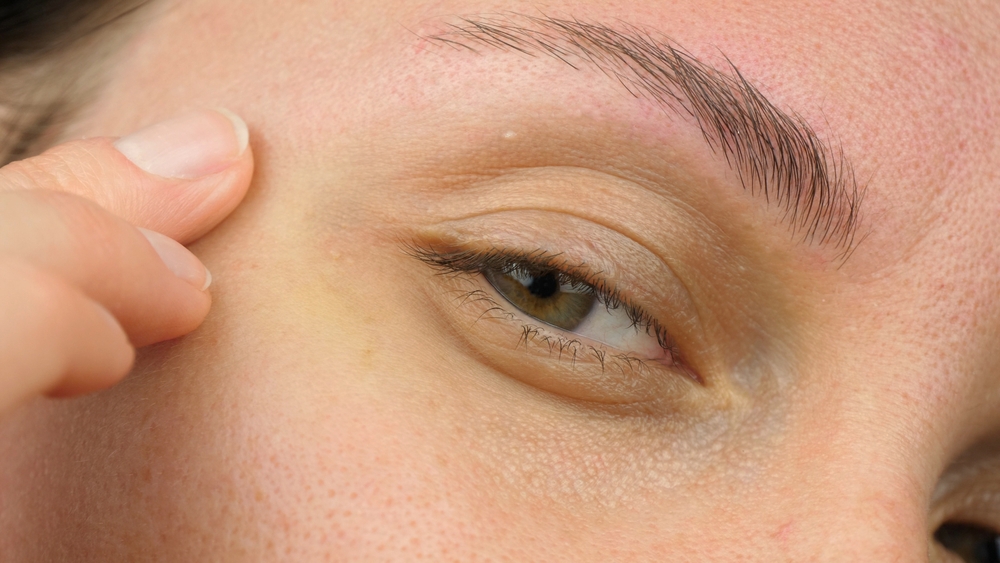
Milia are tiny cysts that occur when keratin, a protein in skin and hair, gets trapped under the surface of the skin and forms tiny cysts. They can develop anywhere on the body, but are frequently found on the face, including on the upper eyelid and the delicate skin below the eyes.
Milia are usually benign and typically do not cause any pain, redness, or infection. They often resolve on their own, but it is important to avoid picking at them as it can lead to irritation and scarring.
Styes
Styes are small, painful bumps that are caused by the inflammation and infection of an oil gland or hair follicle. There are two kinds of styes: external styes that form at the lash line and resemble a pimple, and internal styes that develop inside the eyelid.
They can also be caused by blepharitis, an eye condition that causes blockage of the oil glands near the base of the eyelid. The condition can be a secondary symptom of another condition, such as dry eye or seborrheic dermatitis (dandruff of the scalp and eyelids).
When styes are developing, they can be noticeably red and tender to the touch. They can cause your eye to feel sore and scratchy.
Chalazion
A chalazion is a swollen bump on the eyelid that is caused by blockage of a meibomian gland, the structures that produce the oily layer of healthy tears. They are often painless as they develop, but as they get bigger, a chalazion can cause the eyelid to swell up and become painful to the touch.
Although the meibomian glands are located along the lash line, a chalazion can form on any area of the eyelid. As it grows, it can press on the eye, causing blurry vision.
Ocular Rosacea
Ocular rosacea is a chronic inflammatory eye condition whose symptoms can cause blockage of the meibomian glands, resulting in chalazion or styes if the gland becomes infected. The condition is related to rosacea, which occurs on the skin, but this type only affects the eyes.
The exact cause of ocular rosacea is unknown, but genetics and exposure to triggering allergens may play a role in the occurrence of the condition. Individuals affected by rosacea on their faces are more likely to develop ocular rosacea.
What is the Difference Between a Stye and a Chalazion?
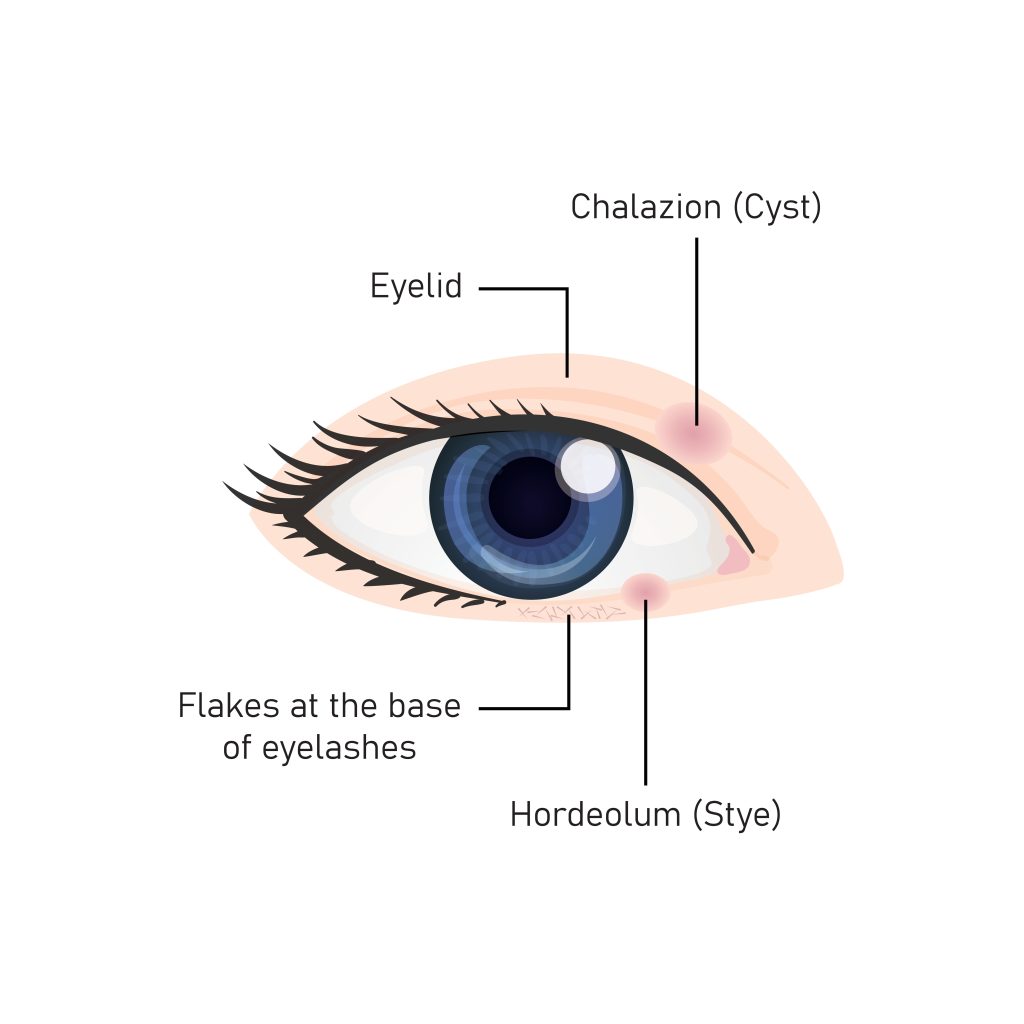
Of all the causes for white bumps on the eyelid, it can be most difficult to tell the difference between a stye and a chalazion. However, they can be easily differentiated by their causes and their location.
A stye is caused by a bacterial infection, while a chalazion is the result of blocked meibomian glands. Because it involves infection, a stye is often inflamed and painful, whereas a chalazion usually causes only swelling, though they can become painful if they start to press on the eye.
Another key difference between the two is their location on the eye. A stye typically occurs on the margin of the eyelid, along the lash line, and a chalazion most often forms further back on the eyelid.
Additionally, a stye tends to clear up more quickly, especially when properly treated, while a chalazion will slowly grow in size and may persist for weeks without treatment.
Who is at Risk for Developing White Bumps on Their Eyelids?
While anyone can develop the conditions that cause white bumps on the eyelids, certain individuals may be more prone to them. Factors that increase risk include:
- Naturally oily skin
- Poor eyelid hygiene
- Use of makeup and skincare products that clog pores
- Frequently touching the eye with unwashed hands
- Contact lens use
- Stress
- Hormonal changes
- A history of eye conditions that cause styes and chalazia, such as ocular rosacea
- Certain chronic health conditions, like diabetes, that often affect the eyes
How are White Bumps on the Eyelid Treated?

The treatment for white bumps on the eyes depends on their cause. Milia usually resolve on their own and require no treatment, though they can be removed if they become bothersome or for aesthetic reasons.
Styes can often be managed by applying warm compresses to the eye several times a day to encourage drainage of the infection. If a stye does not improve or worsens, an eye doctor may prescribe antibiotic eyedrops or ointment to resolve the infection.
The first treatment suggested for a chalazion is the application of warm compresses and gentle massage. Applied warmth helps clogged meibomian glands to open, while massage encourages drainage.
If a chalazion becomes very big or starts to affect vision, a steroid injection can reduce swelling. If a chalazion or stye does not respond to other treatments, an eye doctor may recommend draining it surgically.
Treatments for ocular rosacea aim to control its symptoms and prevent occurrences of the condition. If it has caused complications like clogged meibomian glands, warm compresses and gentle massage, as with a chalazion, can help the gland drain.
While developing white bumps on your eyelid is usually not a serious concern, knowing their cause can ensure you get the proper treatment. When in doubt, consulting with your eye doctor can help restore your eyelid health and prevent reoccurrences.
Ready to restore your eyelid health? Schedule an appointment at Eye Center of Texas in Houston, TX, today!
Related Articles



Financing Options Available
Apply today to find a financing option that meets your needs.
Our Locations
-
455 E. Medical Center Blvd., Suite 110, Webster, TX 77598- Medical Office:
- 281-332-1397
-
22215 Cypresswood Dr., Suite 116
Cypress, TX 77433- Medical Office:
- 346-537-0088
- Medical Fax:
- 346-537-0187
-
6565 W. Loop S., Suite 650, Bellaire, TX 77401- Medical Office:
- 713-797-1010
-
Greenhouse Medical Plaza
2051 Greenhouse Road, Suite 110
Houston, TX 77084- Medical Office:
- 346-547-7070
- Medical Fax:
- 281-214-2971
-
4415 Crenshaw Road, Pasadena, TX 77504- Medical Office:
- 281-977-8800
-
15200 S.W. Freeway, Suite 130, Sugar Land, TX 77478- Medical Office:
- 281-277-1010
-
100 Medical Center Blvd., Suite 118
Conroe, TX 77304- Medical Office:
- 936-647-1610
- Medical Fax:
- 936-647-1620
No locations match that search.