Medically Reviewed by:
A Guide to LASIK Eye Surgery and What to Expect


If you meet the qualifications for Houston LASIK, the procedure can greatly improve your life. LASIK, which stands for laser-assisted in situ keratomileusis, is one of the most common and successful eye surgeries to treat astigmatism, nearsightedness, and farsightedness. (Further reading: What is the difference between nearsighted and farsighted?)
Understanding the Requirements for LASIK Surgery
The surgery is almost always successful, but patients must meet the right requirements. (For evaluation: Am I a candidate for LASIK?) You may be advised against LASIK surgery if your prescription is too high. If you have any temporary problems with your eyes such as conjunctivitis or an infection, you must wait until your eyes have fully healed.
Also, your cornea should be the correct thickness, as performing the surgery on a thin or misshapen cornea can affect the results. If your pupils are too large, your doctor may advise you against LASIK, as the surgery could increase your risk of side effects like halos and glares.
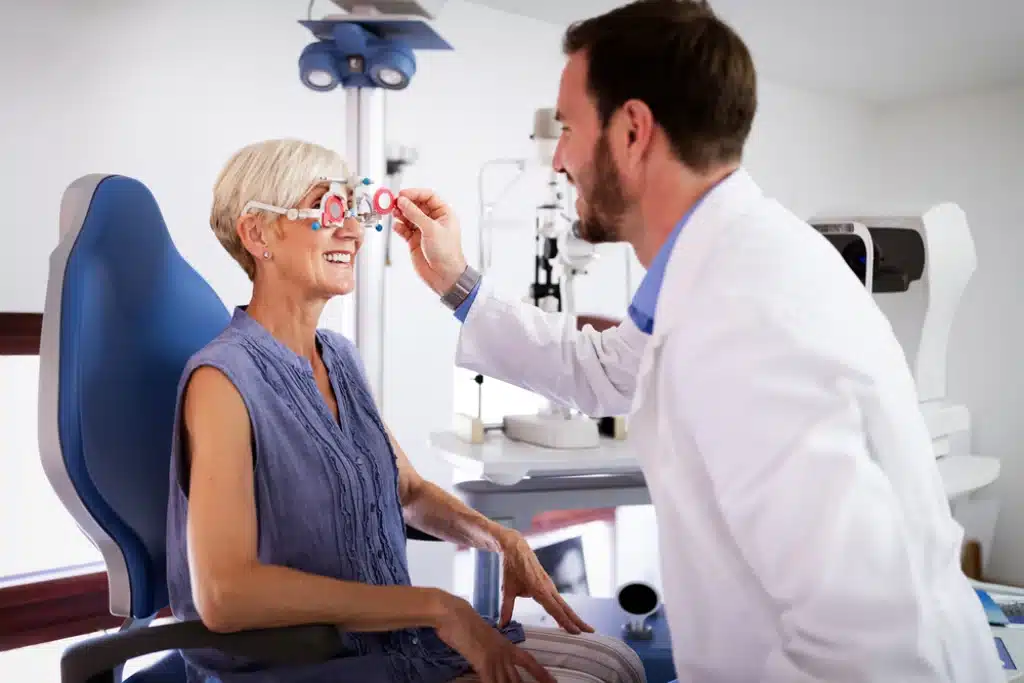
Before your surgery, your doctor will examine your eyes to make sure you are a candidate for LASIK. He or she will examine your cornea with a corneal topographer, an instrument that measures the curvature of your cornea. Your doctor will probably perform a wavefront analysis, a procedure that creates a map of your eye. Your pupil and the moistness of your eyes will also likely be examined.
During the LASIK Procedure
At the beginning of your surgery, your doctor will apply numbing eye drops to your eyes. A lid speculum keeps your eyelids open and a suction ring is applied to your eye to prevent movement. Then, your surgeon will use either a microkeratome tool or a femtosecond laser to create a small flap in your cornea.
The surgeon will fold back the flap to access the part of the eye called the stroma and use an excimer laser to remove some corneal tissue. Removing this tissue allows the cornea to reshape for improved vision. The laser will flatten the cornea for nearsighted people and create a steeper cornea for farsighted people. After the cornea is correctly reshaped, the flap will be placed back over the eye.
LASIK surgery only takes about five minutes on each eye and should be completed within 15 minutes. The procedure is pain-free and does not require stitches or bandages. However, you may feel some burning or itching immediately after the surgery. Your doctor will probably have you rest for a short time before a post-operative exam.
How Long Will My Vision Be Blurry After LASIK?
You will probably experience blurry or hazy vision temporarily, but your vision should be clear by the next day. Most patients notice improvements in their vision within a day of having the surgery. Over the next few days or weeks, your vision will continue to improve. Doctors usually recommend staying home for a couple days after LASIK surgery to rest and refraining from strenuous exercise for a week.
How Long After LASIK Can I See 20/20?
The results of the procedure vary from patient to patient, but many patients may see 20/20 vision after the surgery after a few days. Each patient is unique, and sometimes results may take a few weeks. In less common instances, a few patients may need to continue wearing glasses or contacts but with a much lower prescription. A LASIK enhancement procedure, while uncommon, is sometimes necessary to improve the results of the surgery.
What About LASIK After 40?
Some people also still need to use reading glasses, especially once they enter their 40s. (Read more about blended vision & LASIK after 40 and bifocals & LASIK and However, LASIK surgery has a high success rate and most people who receive the surgery experience drastically improved vision.
LASIK Surgery at Eye Center of Texas & What to Expect
Eye Center of Texas is preferred by over 300 Houston area eye doctors. Our world-class doctors use the latest technology and have helped over 75,000 satisfied patients see clearly. To learn more about LASIK surgery at Eye Center of Texas, contact us today. Here are more resources our patients have found helpful: How long after LASIK can I see 20/20? Learn more about pain above eye socket, What causes dry eyes at night? Why are my eyes red? Learn more about a bump on the eyelid that won’t go away.



Medically Reviewed by:
Easter Eggs are Egg-cellent for Your Eyes.
Good News…there is no reason to eliminate eggs from your Easter celebrations! In fact, the incredible, edible egg is chock full of eye friendly antioxidants and eggs yolks are high in lutein, a type of carotenoid that helps fight macular degeneration, the leading cause of legal blindness. According to a 2009 study, older adults who consumed four egg yolks a day for five weeks had improved macular health. And here’s a little side note: ECT’s Dr. Ting-Fang Suarez usually has a boiled egg in her pocket. She says they’re a filling snack and they’re good for eyes…she should know because she specializes in retina diseases.
There are so many great ways to enjoy eggs that they never get boring. Whether your favorite egg dish is an Easter Egg, omelette or egg salad sandwich, it’s easy to get all the nutrition they contain while reaping their health benefits!
Happy Easter Egg Hunting!
Medically Reviewed by:
Do you have Pre Diabetes?
An estimated 86 million Americans, that’s one in three adults have prediabetes, and nearly 90 percent of them don’t know it. The good news is that prediabetes can be easy to diagnose and can be reversed with diet and exercise.
Tomorrow, March 22, 2016 is Prediabetes Alert Day and The American Diabetes Association is asking Americans to learn where they stand with prediabetes, a condition that can lead to type 2 diabetes.
- Tune in to or record The Dr. Oz Show on Tuesday, March 22, for a program about prediabetes and ways to lower your risk for developing type 2 diabetes.
- Visit DoIHavePrediabetes.org. Take the one-minute risk test and encourage everyone you know to take it, too. A score of 5 or higher means you should talk to your doctor.
Eye Complications due to Diabetes:
People with diabetes do have a higher risk of blindness than people without diabetes. But most people who have diabetes have nothing more than minor eye disorders. With regular checkups, you can keep minor problems minor. And if you do develop a major problem, there are treatments that often work well if you begin them right away.
Eye Center of Texas has 2 ophthalmologist who specialize in diabetic retinopathy: Dr. Ting-Fang Suarez and Dr. Paul Stewart. They would like everyone with prediabetes and diabetes to know that the longer you’ve had diabetes, the more likely you are to have diabetic retinopathy. Almost everyone with type 1 diabetes will eventually have nonproliferative retinopathy. And most people with type 2 diabetes will also get it. But the retinopathy that destroys vision, proliferative retinopathy, is far less common. People who keep their blood sugar levels closer to normal are less likely to have retinopathy or to have milder forms.
Your retina can be badly damaged before you notice any change in vision. Most people with nonproliferative retinopathy have no symptoms. Even with proliferative retinopathy, the more dangerous form, people sometimes have no symptoms until it is too late to treat them. For this reason, you should have your eyes examined regularly by an eye care professional.
Stay at a healthy weight, eat well and be active. With these steps, you can stay healthier longer and lower your risk of diabetes.
Medically Reviewed by:
How to Choose Your LASIK Surgeon
Millions of people have turned to LASIK to correct their vision, however some people use a haphazard approach to choosing a LASIK doctor by selecting a surgeon based on cost. While LASIK has been proven to be both safe and effective, the surgeon you choose is very important, so choose wisely. Ask your optometrist who he/she recommends (ECT co-manages with 275+ Houston area optometrist – and if your optometrist is in our co-managment network, he/she can do you initial LASIK evaluation as well as your post operative LASIK care). Also, ask your co-workers, friends, family who have had LASIK who they recommend. Ask questions to help determine if your surgeon has the qualifications and experience to work on your eyes. Some questions you might want to ask are:
- How many LASIK procedures has the surgeon performed?
- What percent of LASIK patients have achieved a vision of 20/20 or better?
- What percent of LASIK patients have reported complications (halos, starbursts, dry eye, etc.) six months after surgery?
- What percent of patients have needed an LASIK enhancement?
- Equipment: What kind of technology does the surgeon use, and do you have a choice as to the type of technology? Be sure to ask if the surgeon offers 100 percent all-laser LASIK (also known as Bladeless LASIK), or if he/she uses a microkeratome blade (note, Dr. Mark Mayo and Dr. Edward Wade only perform all-laser LASIK).
- Professional, friendly staff: From the receptionist to the surgeon, a vision center’s staff and their demeanor speaks volumes.
- Relationship with your eye doctor: Will the surgeon work with your current eye doctor—both before and after surgery—to ensure your continued satisfaction with your LASIK eye surgery?
- Results: Does your provider offer a warranty (note: Dr. Mark Mayo and Dr. Edward Wade offer a ‘limited lifetime warranty’ at no additional cost).
The doctors at Eye Center of Texas will take the time to evaluate your eyes and discuss all available vision correction options, including LASIK, PRK and Visian ICL.
If you are ready to have the best vision of your life, call us today at 713-395-1515.
Medically Reviewed by:
What Causes Eye Twitches?
Eyelid twitches (or essential blepharospasm) are involuntary muscle movements that happen in one or both eyelids. Mild occurrences are very common, similar to the minor muscle spasms most people experience in their arms or legs. If you are experiencing a pesky eyelid tic or twitch, these are possible causes.
Stress. There’s not much you can do about this except try to minimize the causes of stress.
Fatigue and tiredness. Not just your body, but your eyes get tired too when over-worked. Catch up with a good night’s sleep.
Alcohol and caffeine. Decaf your life and cut back on alcohol consumption to give your eyes some relief.
Dry eyes. Using computers and wearing contact lenses for long periods of time can cause your eyes to dry, thus making them twitch. Lubricating eye drops can help a great deal.
Eye strain. Prolonged usage of technology that involves continuous gazing at a computer/video/iPhone/iPad screen may cause computer vision syndrome. One of the symptoms can be eye twitching. Cut back on time spent in front of these devices. If it’s part of your job, there are protective lenses you can wear to relieve symptoms, even if you don’t require corrective lenses. Ask your eye care professional for advice.
Allergies and irritation. Environmental factors such as dust, smoke, chemicals, pollens, pet dander and other tiny particles in the air can make your eyes twitch.
Nutritional imbalance. Lack of essential nutrients in your diet may also cause that disturbing eye twitch. So eat healthfully!
Medically Reviewed by:
Why Is a Dilated Eye Exam Important?
March is National Save Your Vision Month and while you may think that having good vision means that your eyes are healthy, that may not always be the case. A comprehensive eye exam that include dilation is important to help your doctor see the early symptoms of both vision-related and overall health problems.
When your eyes are dilated, your eye doctor can view the entire retina, including the blood vessels and optic nerve. This allows your doctor to see early signs of damage that could be indicators of serious conditions such as diabetes, tumors, high blood pressure, infectious diseases, macular degeneration and retinal detachment as well as other conditions.
If your doctor recommends dilation, he or she will put special drops in each eye to widen the pupil, which is the opening in the center of the iris (the colored part of the eye). Dilating the pupil allows more light to enter the eye the same way opening a door allows light into a dark room. Once dilated, each eye is examined using a special magnifying lens that provides a clear view of important tissues at the back of the eye, including the retina, the macula, and the optic nerve.
In a person with diabetic retinopathy (the most common diabetic eye disease and a leading cause of blindness in the United States), the exam may show swelling or leaking of blood vessels in the retina, the light-sensitive layers of tissue at the back of the eye. Your doctor may also see abnormal growth of blood vessels in the retina associated with diabetic retinopathy.
In age-related macular degeneration (AMD), a common cause of vision loss and blindness in people over the age of 50, the exam may show yellow deposits called drusen or clumps of pigment beneath the retina. In some cases, the exam may also show abnormal growth of blood vessels beneath the retina. These AMD-related changes tend to cause deterioration of a small area of the retina called the macula, which is needed for sharp, central vision.
A comprehensive dilated eye exam is also critical for detecting glaucoma, a disease that damages the optic nerve, which carries information from the eyes to the brain. In a person with glaucoma, the dilated exam may show changes in the shape and color of the optic nerve fibers. The exam may also show excessive cupping of the optic disc, the place where the optic nerve fibers exit the eye and enter the brain.
While your eyes are dilated, they will be more sensitive to light. If you do not have sunglasses with you, the doctor’s office will have disposable shades for you to use as you leave. You may also experience difficulty with close-up vision until the drops wear off, usually within a few hours.
Please remember, getting a delated eye exam can save your vision.
Medically Reviewed by:
Do You Know How to Identify Eye Health Risks?
You can do many things to keep them healthy and make sure you’re seeing your best. Follow these simple guidelines for maintaining healthy eyes.
Diabetes – High blood sugar may cause the lens to swell, leading to distorted vision and can lead to diabetic retinopathy, a leading cause of blindness.
Obesity and High Blood Pressure – Being overweight or obese increases your risk of developing diabetes and other systemic conditions, which can lead to vision loss, such as diabetic eye disease or glaucoma.
Smoking – The risk of cataracts more than doubles for people who smoke and the risk of developing age-related macular degeneration (AMD) is three times higher.
Know your Family’s Eye Health History – Talk to your family members about their eye health history. It’s important to know if anyone has been diagnosed with an eye disease or condition since many are hereditary. FYI…a very strong genetic correlation exists with glaucoma.
Eat right to protect your sight – Eating a diet rich in fruits and vegetables—particularly dark leafy greens, such as spinach, kale, or collard greens—is important for keeping your eyes healthy. Research has also shown there are eye health benefits from eating fish high in omega-3 fatty acids, such as salmon, tuna, and halibut.
Prolonged Use of Corticosteroid Medications – the use of inhaled and oral steroids as well as eye drops containing steroids can accelerate the development of cataracts and contribute to glaucoma.
Drinking Excessive Amounts of Alcohol – chronic drinkers are at a higher risk for eye disorders.
Previous Eye Injury or Eye Surgery – this is the leading cause of cataracts in people under 40.
Wear Your Shades – When purchasing sunglasses, look for ones that block out 99 to 100 percent of both UV-A and UV-B radiation.
Give your eyes a rest. If you spend a lot of time at the computer or focusing on any one thing, you sometimes forget to blink and your eyes can get fatigued. Try the 20-20-20 rule: Every 20 minutes, look away about 20 feet in front of you for 20 seconds.
Our doctors, Dr. Mark L. Mayo, Dr. Edward Wade, Dr. Ting-Fang Suarez, and Dr. Paul Stewart recommend if any of these factors are creating vision problems, schedule a comprehensive dilated eye exam with your eye doctor.
Medically Reviewed by:
Eat Right For Your SIGHT!
Proper nutrition is critical to good eye health.
- Eat Lots of Vegetables and Fruits – Antioxidants protect against oxidation, which is a part of the process of macular degeneration (AMD). Dark green leafy vegetables like spinach, kale, mustard greens, and collard greens contain high levels of lutein, a critical antioxidant. Antioxidants are also present in fruits and vegetables with bright color, including red grapes, peppers, corn, oranges, cantaloupe, and mango. Look for fresh produce in a variety of colors to get a wide range of vitamins in your diet.
- Eat Fish – People who eat fish 2-3 times a week have a lower risk for AMD. Fish contain omega-3 which seems to be a critical nutrient for the heart and eyes. The best fish are either wild salmon or small fish like sardines. If you cannot tolerate fish or obtain it easily, an omega-3 supplement is another option.
- Limit Your Fat Intake – In reviewing studies on fat, researchers found that while the amount of fat consumed makes a difference, the real issue for AMD is the number of saturated fats a patient consumes. The biggest source of saturated fat is animal products – beef, lamb, pork, lard, butter, cream, whole milk, and high-fat cheese. Plant oils also have saturated fat, including coconut oil, cocoa butter, palm oil, and palm kernel oil. Read the labels on processed foods and baked goods, as they often have high amounts of saturated fats. Instead, consume healthy fats like olive oil or avocado.
In addition to eating right Dr. Mark Mayo, Dr. Edward Wade, Dr. Ting-Fang Suarez, and Dr. Paul Stewart suggest you follow the below to help prevent AMD:
- Don’t Smoke
- Exercise regularly, and maintain a healthy weight
- Keep your blood pressure and cholesterol under control
- Wear sunglasses outdoors to block UV that may cause eye damage
- Have regular eye exams.
Medically Reviewed by:
Living with AMD
While there is no cure for Age-related Macular Degeneration (AMD), there are steps you can take to help reduce your risk of progression.
Monitor your vision weekly.
Use an Amsler grid, a tool that helps you monitor subtle changes in your central vision. Some forms of AMD can progress very quickly. Monitoring your vision weekly can help you notice any changes. If you do notice changes, talk to your eye doctor immediately.
Keep your eye doctor appointments.
Experts recommend a comprehensive eye exam at least once a year for everyone. Some changes in vision may be best detected by an eye care professional, so it’s important to keep your eye appointments, as directed.
If you smoke, quit.
We know it’s not easy. But stopping smoking may be the most important thing you can do to help reduce your risk of AMD progression. Consider creating a plan to stop smoking that is tailored specifically to your needs and habit.
Maintain your overall health. High cholesterol and blood pressure can increase your risk of AMD. Try to exercise for 30 minutes a few times a week. Consult your doctor before starting any exercise routine. Strive for a balanced diet rich in fruits and vegetables, particularly dark, leafy greens. Get your blood pressure and cholesterol levels checked.
Consider low-vision aids.
Many people with AMD may also benefit from the help of low-vision aids, devices designed to help people with low vision function better, such as handheld magnifiers.
Medically Reviewed by:
Be My LASIK Valentine
Valentine’s Day 2016 is this Sunday…and if your sweetheart wears glasses and/or contacts, how about giving the gift of better sight? LASIK may not be the most romantic gift, but unlike chocolate or flowers the gift of sight will last a lifetime! Think about it, you could look into your sweetheart’s eyes – without looking through glasses!
All-Laser LASIK at Eye Center of Texas is a state-of-the-art method of laser vision correction that leaves the vast majority seeing 20/20 or better. LASIK is quick, simple and relatively painless solution to correct refractive errors such as nearsightedness or farsightedness, with or without astigmatism.
LASIK Gift Certificates are available by calling 713-395-1515 (ask for Steve or Kathy).
They will be happy to help create the perfect Valentine’s Day LASIK Certificate!
Financing Options Available
Apply today to find a financing option that meets your needs.
Our Locations
-
455 E. Medical Center Blvd., Suite 110, Webster, TX 77598- Medical Office:
- 281-332-1397
-
22215 Cypresswood Dr., Suite 116
Cypress, TX 77433- Medical Office:
- 346-537-0088
- Medical Fax:
- 346-537-0187
-
6565 W. Loop S., Suite 650, Bellaire, TX 77401- Medical Office:
- 713-797-1010
-
Greenhouse Medical Plaza
2051 Greenhouse Road, Suite 110
Houston, TX 77084- Medical Office:
- 346-547-7070
- Medical Fax:
- 281-214-2971
-
4415 Crenshaw Road, Pasadena, TX 77504- Medical Office:
- 281-977-8800
-
15200 S.W. Freeway, Suite 130, Sugar Land, TX 77478- Medical Office:
- 281-277-1010
-
100 Medical Center Blvd., Suite 118
Conroe, TX 77304- Medical Office:
- 936-647-1610
- Medical Fax:
- 936-647-1620
No locations match that search.